Saturday, October 19, 2024

First Day of the Rest of my Life

I started this blog on September 17th, while recovering from Covid-19 while traveling in Europe.


Today is the first day of the rest of my life. It truly is time. My focus needs to be on taking care of myself. It’s time. I’ve been writing blogs for nearly 15 years, give or take. I’ve written about life, about work, about triathlon and training. I’ve written about what matters, about who I am, about what drives me. Fifteen years ago, I crashed my bike during the Long Course Triathlon World Championships in Perth, Australia. I remember taking that as a sign to slow down. For a brief period of time, I did slow down. But then I sped up again. I know that this pattern has repeated itself on several occasions. I can’t seem to get out of my own way. In many ways, the situation has actually gotten worse over time. I remember the things I wanted to focus on when I retired for the first time. 


In fact, I remember waking up the morning after I sold my practice nearly 14 years ago. I realized that I hadn’t dreamed that night. I’m someone who processes in my sleep, and when I’m consumed with work, I dream about it. That night, a huge weight was lifted off me and I didn’t dream. I woke up that day with the thought that “I didn’t want to fight anymore.” For many years, and possibly most of my life, I feel like I’ve been fighting. Whether as a young person writing a letter to President Johnson to end the war, fighting with my father to win arguments, fighting for the success of my businesses, or lately, fighting with people on social media over world events and politics. I really don’t want to fight anymore.


There were things that I found enjoyable at the time. There were things that I wanted to do for myself. On one hand, I was able to pursue my triathlon and Ironman dreams. Beyond that, however, I’ve struggled with the concept of doing enjoyable things for myself. There seem to be fewer things that bring me personal joy. I’m pulled into the rabbit hole of trying to make a difference for others instead. I know it’s the wrong path, yet I seem to have fewer and fewer options. Maybe that’s the point. 


So much of my life has been about trying to “accomplish” something. Most of that has been with the purpose of helping others. My “drive” has always been the key factor in most things that I do.  Acting on my impulses has been the determining factor. The irony is that I act “in the moment,” although I have trouble appreciating being in the moment. But I do know what those moments are. Perhaps it’s the adrenaline that has caused me to forget them.  


I’m realizing that the things that used to bring me joy are still out there. I just need to embrace them again. One step at a time. One thing at a time. I know that I can still do things for myself and appreciate those things. I don’t have to spend every waking hour trying to make a difference for others. That’s what I do. That’s what I’ve always seem to be doing. It’s more difficult when one is successful. It’s time to let go. Today is truly the first day of the rest of my life. 

Thursday, September 12, 2024

Recalibrating after Covid

It took me four and a half years, but I finally got Covid. I didn't even realize it at first, waking up on a Tuesday morning in a hotel room in Trier, Germany and feeling like my mouth was dry.  I got up, walked over to the table near the window, remember preparing to pour a glass of water but starting to feel very nauseous.  The next thing I knew I was coming to, laying on the floor of the hotel room under the table.  I wasn't fully conscious of what happened and I got up again. The next time that I came to my wife was yelling my name.  She kept me from standing up immediately and tended to my head wound. I'd hit my head at some point when I passed out (not sure if it was the first or second time). I was drenched in sweat, to the point that the floor was slick.  Finally, I got back to bed and began hydrating, as best I could.  I was still feeling both nauseous and very woozy.  While there's still a lot more to this story, I didn't test myself for COVID-19 until a day or two later, when it hit me that I might be having unusual symptoms.  Of course, by then, my wife had symptoms of both nausea and excessive mucus production. It was COVID-19.  Of note, the morning before I passed out I ran 2 miles to pick up our rental car.  My heart rate was a little higher than normal, but otherwise, no major signs.

Here I am, ten days after passing out from COVID-19. I intuitively know that my recovery will need to be slow and cautious.  No high heart rate work. In fact, I went for a walk today for about a mile and a half and found myself walking briskly, and my heart rate had come up to 110. Nope!  I slowed down and got my heart rate back down to 90.  Not only do I need to keep my heart rate below 100 for the next few weeks, but when I start running again, I'm thinking of recalibrating to a heart rate under 120.  If I have to walk, then I have to walk.  Knowing how my body responds, this process could take a few months and patience will be paramount.  In many ways, my recalibration is once again reminding me of some blogs I wrote fifteen years ago, after I crashed my bike in Perth.  I felt like my life had been going too fast and my shoulder and hip fractures necessitated my slowing down. Hmmm.  Might be the same story once again. 

As a reminder of our own human frailties, I found out yesterday that a triathlete friend whom I'd gotten to know over the past decade, and who was near my age, died recently.  She was a fiery personality, prone to dropping an "F-bomb" with regularity. She was also someone who said exactly what she thought, when she thought it. I always looked forward to running into her at the pool and sharing training stories!  As I'd moved a year ago, it was unlikely that I'd run into her again, but I will miss her and miss knowing that she is no longer spicing up the pool lane! It's also a reminder to me that our time is short.  And so I find myself writing today. What do I write about? Training.  I guess that should tell me something.

Friday, June 14, 2024

Going on 65, and my 5K Goal

I only blogged once in 2023 and blogged on the first day of 2024. In the past when I've written a blog, I let my dad know. He was my inspiration to blog, having kept a journal daily for over forty years. He passed away on March 11th.  I know that he'll still be reading my blogs:)

In four days, I turn 65. The last several years have seen multiple ups and downs in my training. There's been a constant reminder of the impact of life stress on training and fitness. In some ways, I probably reached a pinnacle of sorts in 2014, but did manage to raise my fitness prior to completing a life's goal at Kona in 2019, at the age of 60.  Everything since has been a blur, as my life as a geriatrician took precedence during the pandemic, with a very short interval leading up to the Ironman World Championships in St. George over two years ago.  

The single greatest lesson from IM St. George was the toll that Ironman takes on the body.  Combined with other life stressors, I feel like I'm only now coming out of the aftermath of that race.  I literally haven't biked since, and have only swum intermittently.  While I'm sure that there are still triathlons in my future, if there's one thing I've learned over the years is that it's still about the run!  Since my triathlon career from here on will be shorter distances, it strikes me as the time to focus on my shorter distance run speed.  

There is a historical context worth reviewing (which I'm sure that I've done before). My very first 5K was in 1992, at the age of 33.  I believe my time was ~23 1/2 minutes.  At the age of 46, I ran a 21:08 in Colorado before achieving a lifetime best of 19:30 at sea level two days after turning 49.  Ironman training soon took over and not only wasn't I training for 5K speed, I didn't run many 5Ks.  In 2012, after moving to Southern California, I did a 5K in 21:06 shortly before turning 53.  At 54 I ran 21:47; at 57 I ran 22:38; at 60 I ran 23:35; the day before turning 64 I ran 23:32. Since I moved to New Zealand in November, I've run twenty-two 5Ks! Some I've run hard, some I've run easy.  Since the move, at the age of 64, my fastest 5K has been 24:00, on a hilly course. Overall, it looks like my 5K speed has been relatively stable this past year.   

Since I'm a goal oriented person, I'm once again setting some 5K goals for the coming year. Next weekend, will be yet another local ParkRun 5K, on the same hilly course where I ran 24:00 four months ago.  The first question is how fast I can get with the proper training.  The second question is whether I can be consistent in my training so as to maximize my potential.  In discussing this with my coach of 19 years (yes, 19 years!), the training plan became clear.  Two workouts every week of speed:  one of those workouts will be faster than 5K pace with intervals of 30 seconds to 2 minutes; the second workout will be Tempo w/ 6 x 5 minutes or 20 minutes non-stop.  The rest of my running during the week will be to accumulate volume, to include at least one long run, most likely between 9 and 12 miles.  I can't let the volume hurt the quality of the speed work, and I can't let the speed work negatively impact the volume.  

Last weekend, I ran a 5K at a very hard effort, with mile splits of 7:36, 8:08 and 8:33 finishing strong at 7:45 pace for a final time of 25:03. That's my starting point going forward on this course. I definitely went out too hard, and absolutely died during the third mile.

Three days ago, I did Hill Speedwork with 4 x 40" up a hill that is steep for 1/3, then flatter for the last 2/3, averaging 7 minute pace for each interval.  This workout is gold, and I look forward to increasing the number of intervals. It will help with both my speed and my strength, which at 65 is essential.

Two days ago, I ran 8 miles comfortably on a hilly course with an average pace of 10:06 and average heart rate of 146.

Today, I warmed up with 4 miles at MAF effort and 9:56 pace, average HR of 128. After a short rest, ran a 5K at Tempo effort, in what actually felt like a relatively "comfortable" Tempo effort (which ironically felt easier than the last mile of last week's 5K).  Ran these miles in 8:29, 8:20 and 8:11, finishing at 7:36 pace and a time of 25:55 with average heart rate of 151.  The last two miles were Tempo effort, with my heart rate totally in my Tempo Zone.  To finish up, after only recovering for a few minutes, I ran two more miles, at 10:42 pace with an average heart rate of 135.  Perfectly done!

Next Saturday will be my weekly 5K. Will I run another Tempo run? Will I go hard to see where I am for the upcoming year? I'll probably let my coach decide:), but since I ran hard a week ago, it doesn't seem to make a lot of sense to do another hard 5K.  I should give myself the requisite 6-7 weeks of training to see how much I've progressed before another "test" race.

There's no question that we get slower as we get older. However, from week to week, month to month, and even year to year, it doesn't have to be that way!  Let's see what I can do over the upcoming year. It's my own experiment of what the human body can do at the age of 65.  I will admit, I have a relatively limited amount of time to improve my 5K times compared to what I've done over the past decade. I haven't broken 23 minutes since the age of 57.  I'm not sure if it's possible, but I know that I can get back to the 23:32 I ran just before I turned 64.

Going on 65, and my 5K Goal


Sunday, December 31, 2023

2024: Starting the Year With a 5K

I slept in this morning, the first day of the new year.  I had planned to get up and do the New Years Day Hobsonville Parkrun 5K, and when I realized that I could literally put on my running shoes and run to the start with a minute or two to spare, I made the decision to do it. Originally, I'd planned to go hard today, but since I had not had time to stretch, I made the decision to run easy...at least for the first couple of miles.  But let me take a step back.  It's 2024 and I haven't written a blog post since July of 2023, when I wrote about my focus on finding my running and swimming speed.  The best laid plans... Literally 5 1/2 months later, after moving 6,000 miles away literally to the other side of the world.  Today was my 8th 5K in 6 1/2 weeks, albeit still fighting some hip and back issues. I've been incredibly consistent, averaging right around 25 minutes and not having attempted to go all out yet.  Looking at my last blog post, I estimated that I was capable of running a 5K in 22-23 minutes.  That's going to be my goal for 2024...I love having a goal.  

Today's 5K was about taking things as they came.  I used my 2 mile warm up run well, averaging ~10 minute/mile pace at a low heart rate. Check.  Since I didn't do anything fast, and the race was literally starting a couple of minutes after I arrived, I decided to start easy, which turned out to be 9 minute pace for the first two miles, my effort did increase during the second mile, but still was within my Z2 heart rate effort.  By the time I finished the first two miles, I felt it was ok to run the last mile hard...not super hard, but hard nevertheless.  I kept under 8 minute/mile pace, considering that my right hip/hamstring insertion was sore yet again (probably from not fully stretching beforehand), I'll take it.  This was the fastest I've run the third mile of the 5K since I began doing this race in November.  

I look back at 2023 only very briefly.  Honestly, it is not a year I plan to remember very much of.  It was filled with stressors, and as usual, I wouldn't change a thing, because now we're in New Zealand an I'm running a local 5K every Saturday morning!  

I still feel that my last Ironman, which was now over a year and a half ago, definitely took its toll.  In yet another reminder that my full Ironman days should be over, I don't believe that my body has let me forget.  My back and hips continue to have issues, although I'm now doing near daily core exercises and stretching.  Hopefully, with time and patience, I won't wake up every morning already stiff and sore.  I'm fortunate that over the past thirty years, I've built a base of fitness that my body can call upon.  Still, it's been humbling to "hit the fall" of a 5K within 1 1/2 miles of the start.  I'm hoping that I can build up some endurance associated with hard efforts that will carry me through in the coming year.  So far, my best time of 24:20 wasn't a typical all out 5K effort.  That's encouraging, insofar as my fastest 5K in the last two years is only about a minute faster.

One of the funnest parts of my journey has been seeing what this 64 year old body is capable of.  Considering that 32 years ago, at the age of 32, I ran my first 5K, and my time then was right around 23 minutes.  Getting back to that time seems to be a reasonable goal right now, and all signs seem to be consistent with my being capable of doing so.  Right now, I'll be targeting June 22nd as my first 5K at the age of 65.  Let's see what I can do then!

I also pulled out my guitar yesterday, for the first time in years.  For a moment, I felt like I was 16 again!  There are a number of things that I need to be doing with my life, not the least of which are doing things that aren't stressful.  It's time.  2024 is here.  I'm ready to embrace it!

Sunday, July 23, 2023

Surprise: When I'm 64!

I've often joked in the past year or two that I'm as fit as I've ever been, but have more aches and pains. This has recently taken on a whole new meaning.  I completed my sixteenth, and final (for now), Ironman nearly 15 months ago.  Whether it was the difficulty of the race, or the additive stress of my "work" related efforts over the past year and a half, I felt physically demolished.  Over the past year, I've had hip, back and shoulder pains.  It often takes me an hour of stretching and movement to be able to walk comfortably.  I hadn't been on my bike until a few weeks ago.  I did keep running, albeit, not nearly at the volumes I reached in the past couple of years.  I also finally got back to swimming a few months ago, which, not remarkably, have been helping my shoulders start to feel better.  With my decision to "retire" from the Ironman distance came the natural desire to work on shorter (and faster) efforts.  I'm not doing any specific "training," but continue to focus on doing what I want, when I want.  So, imagine my surprise over the past few weeks as I've "tested" myself out in relation to my run, swim and bike abilities!

While I haven't done a lot of speed specific training, I have worked some shorter, faster efforts into by run and swim "training."  From the run perspective, this culminated last week when we spent the week in San Diego with our grandson.  I was one mile from the UCSD track and couldn't resist going to the track for my workouts.  I've never considered myself to be fast, but have to remember that I was asthmatic as a child and never ran one mile non stop until I was 32!  So, I really don't know what my capabilities were when I was younger.   Also, since I gravitated to longer distance running early in my running "career," I really don't know my speed capability, short of my one sub-20 minute 5K on my 49th birthday.  Ironically, my 5K times over the past thirty years have consistently been in the 22-23 minute range.  

When I lived in Colorado, I did run with a track club and would occasionally find myself running 400m in about 90 seconds.  There was one day, about 15 years ago, that I ran one mile on a track (at sea level, compared to my training at 5K feet), in just under 6 minutes.  My only other sub-6 minute miles (most recently in the last few months) have been aided by downhills.  I went to the UCSD track and did a workout I've been doing on the street close to home.  3 x 200m, 200m, 400m.  I didn't look at my watch and just ran this solidly.  My 200m times were ~43-44 seconds, or a 5:44-5:52/miles pace.  My 400m times were done in 91-93 seconds, or a 6:04-6:12/mile pace. With this background, combined with my daily aches and pains, I took to "testing" myself out on the UCSD track.  Having conferred with my coach, I endeavored to complete a 100m, 400m and 800m track run.  

Here are my results:

100m in 16 seconds

400m in 82 seconds

800m in 3 minutes.

First of all, these three times are internally consistent.  Second, they're literally as fast as I've ever run them!  They correspond to my potential to run a 5K in 22-23 minutes.  Second, compared to other 64 year old runners, while I'm not at the highest level. I'm pretty darn competitive.  The irony is that I've never considered myself to be a fast runner, but somehow at the age of 64, I am!  It makes me wonder what I might have done when I was younger if I'd believed myself capable of running faster.  It also continues to blow me away in relation to my daily aches and pains.  However, it also gives me both confidence and inspiration to persevere in my athletic quests.  

I haven't done a triathlon since the Ironman World Championship in St. George 15 months ago.  I'm signed up to compete in a sprint triathlon in one week.  The distances are the complete opposite of an Ironman. The swim is 1/4 mile (in the ocean). The bike is 8 miles. The run is 2.5 miles.  With this in mind, I've also recently been focused on my swim speed.  I've recently tested myself at 25, 50, 100, and 300 yards.

25 yards in 16 seconds

50 yards in 36 seconds

100 yards in 1:20

500 yards in 8:00

These are also times that I are close to the fastest times I've ever swam.  

I only got on my bike a few times in the last couple of weeks and my power output isn't far off from where it was over a year ago.  

I'm excited to be racing a triathlon again.  Doing a sprint will be both interesting and hard.  I'm sure I'll spend this week continuing to deal with nagging aches and pains in my shoulders, hip and back. But, next weekend I will race.  Looking forward to writing the race report!

Monday, September 26, 2022

The Last Full Measure of Devotion

Philip Prince's https://wishofalifetime.org came about due to a weight he'd carried from the moment his brother Palmer died.  Philip was in basic training at the time and could not come home for his brother's service.  The inability to properly pay his respects to his brother was something that Philip carried with him throughout his exemplary life.  I will never forget the moment that Philip threw the wreath into the water off the coast of Okinawa at the coordinates where his brother’s remains had been laid to rest. Philip had carried that weight on his shoulders for 67 years.  The weight came off before my eyes, reminding me of the types of things that really matter to us. No matter how old we are, there are always things that are important to us. Being with Philip that day was one of the most meaningful moments of my life. 


Our trip had come full circle and on our last full day in Okinawa it was appropriate that we visited Kadena Air Force Base.  Major Christopher Anderson and Casey Connell gave us a tour of the base and made us feel at home.  We both continued to learn a lot.  I think that it had only been more helpful to Philip and myself to see the ultimate impact of Palmer’s service to his country.  Kadena is the largest Air Force installation in the Pacific and home to the 18th Wing, the largest combat air wing in the Air Force.  As we were there, we were reminded of the impact of this base as the Chinese and Japanese postured over a couple of islands nearby.  In today's world, the importance of this base can not be overstated.

Major Anderson and Mr. Connell first took us to see a place where the Japanese had hid kamikaze planes prior to the invasion of Okinawa.  These were not the planes that hit the USS Hyman, but that didn’t really matter.  You could see the meaning on Philip’s face as we bent over to look inside the concrete shells that had once housed kamikaze planes.  


From there we drove to the spot where the Japanese surrendered in Okinawa in September of 1945.  As we learned at the Okinawa Prefectural Peace Memorial Museum, the Okinawan people do not speak of war, they speak only of peace.  It is unfortunate, but true, that we still live in a world where peace must still be accompanied by a military.  The fact that Major Anderson was Chief of Public Affairs for the 18th Wing and that Mr. Connell was one of their historians, told me the importance that our military places on this.  Those that refuse to acknowledge history, are destined to repeat it.  


Eighty three years ago, Hugh Palmer Prince joined the Navy.  Subsequently, his three brothers, Eugene, David and Philip, would join the army.  Eugene would get a medical discharge.  David would serve in Europe and was badly injured after the Battle of the Bulge.  Philip would have been part of the invasion of mainland Japan if not for the dropping of the bombs and the Japanese surrender.  Four brothers served their country, three came home and continued to serve their country in various ways.


Philip’s brother Eugene joined the Army but was medically discharged during basic training due to rheumatic heart disease.  He graduated from the University of Tennessee in Engineering and worked for the Clinchfield Railroad.  Later he went on to work for the Richmond-Fredericksberg & Potomac Railroad.  He passed away in 1988.


Philip’s brother David served in the 78th Division which went through England, France, Belgium and Germany. He was the recipient of the Bronze Star, three Battle Stars, and the Purple Heart where he was wounded by a mortar shell after the Battle of the Bulge. As he was being evacuated, a German plane strafed the vehicle he was in.  He returned to go to Wofford College, then went on to receive his PhD from the University of North Carolina.  He then became a Professor at Wofford College where he ultimately served as Chairman of the Education Department.  He passed away in 2005.


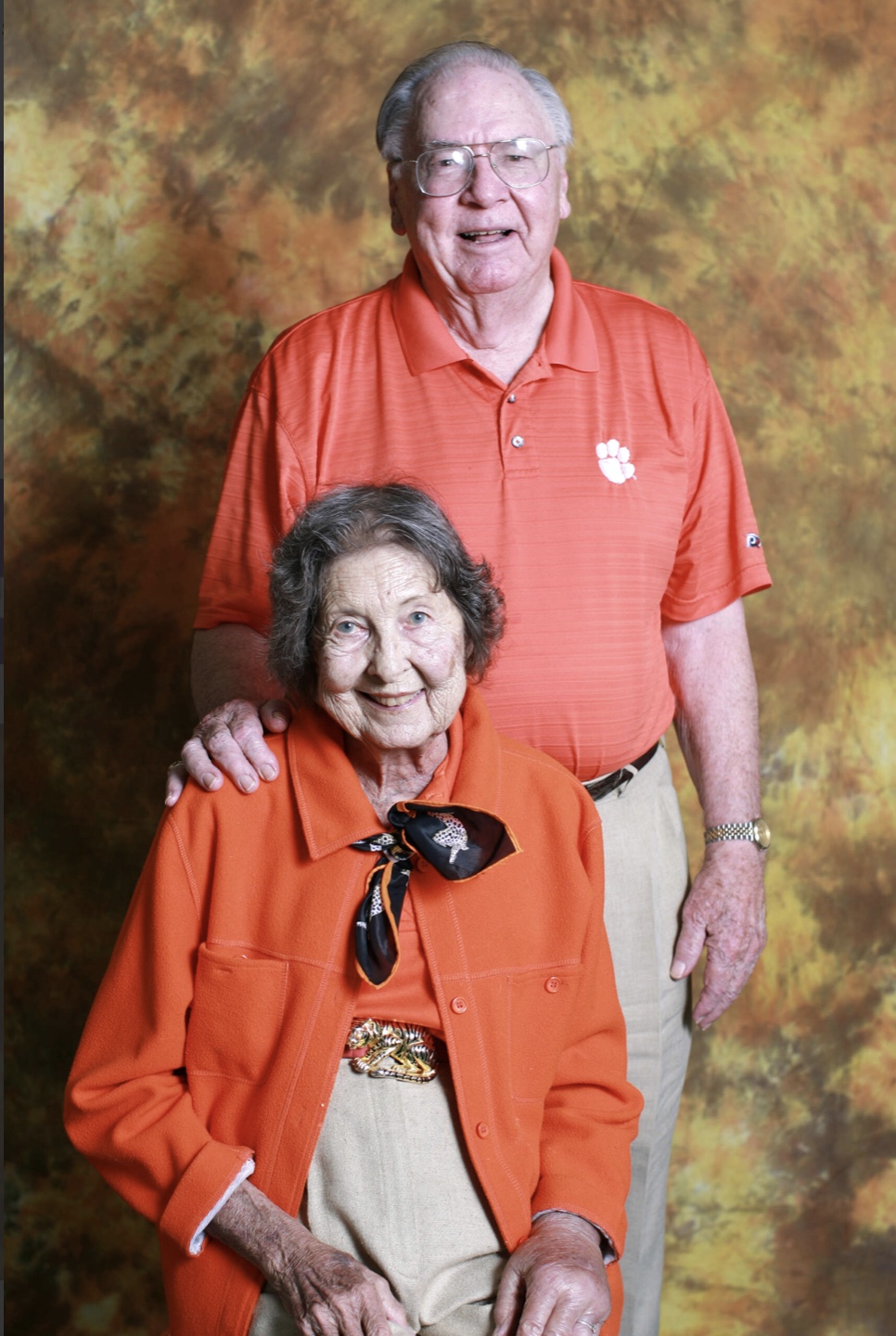
Philip lived an exemplary life.  From the very moment he set foot on the Clemson campus in 1944, his heart was with the Clemson Tigers.  In 1994, Philip stepped up to take the reins as the 12th President of Clemson University.  The organizational changes that he instituted in only one year still stand. He became a tireless fundraiser for the University.  He raised funds for a large endowment, and continued to work on raising additional funding, recognizing the ongoing decrease in state funding.  His legacy will continue, as both of his grandsons attended Clemson.  Philip died February 28, 2020.


Hugh Palmer Prince, gave the last full measure of devotion to his country.  Through the auspices of the Wish of a Lifetime Foundation (https://wishofalifetime.org). Philip was able to pay his final respects to his brother.  I not only made a new friend, but continued to learn.  As Philip saw over our week together, I love to ask questions.  As a physician, I often say that I learn every day how little I know.  As a human being, I feel the same way.  Getting to know our elders and trying to learn from them is one way for all of us to grow.  In this way, Palmer’s legacy will always continue.


Sunday, September 25, 2022

The Life of Philip Prince

Returning to Clemson, Philip distinguished himself as a member of Alpha Phi Omega and was Co-captain of the 1948 Football Team which won the 1949 Gator Bowl.  Philip made one of the biggest plays in Clemson football history, a blocked punt against South Carolina in 1948.

The Tigers were undefeated at the time when they found themselves trailing South Carolina 7-6 with just four minutes left in the game.  With the line of scrimmage at the South Carolina 28, Gamecocks punter and quarterback Bob Hagan felt he just needed a solid punt to put the Tigers in poor field position.  One more defensive stand against a Clemson team that had scored just six points to that point would do it.  Philip took a different route on his rush, got by his man and blocked Hagan’s punt.  The ball caromed to the 11-yard-line where Oscar Thompson picked up the ball and returned it for a touchdown.  The Tigers went on to an 11-0 record in 1948, the school’s first undefeated season since 1900, and a number-11 final ranking in the AP poll, the highest in school history at the time.   Clemson, Michigan and Notre Dame were the only college football teams with perfect records that year and most historians, former players and coaches, remember Philip’s blocked punt as the key play of that season.


Philip was Vice President of the 1949 Clemson Senior Class. Upon graduation, he signed with the New York Giants football team, playing in about five games, while attending graduate school, but a shoulder separation saw him finish out the season with the New Jersey Giants farm team, and although he was asked back the following year, he opted to focus on school and getting married. He attended Columbia University and Kings College prior to additional service in the Army in 1950-1951. Philip worked his way up to becoming vice president of the Milliken Company, where he worked until 1967. In 1978 he became Senior Vice President of American Express Company and then with Synco Property, Inc. until his retirement in 1985.  


Philip also had a distinguished record of service as a Clemson alumnus, becoming President of the Board of the Clemson Foundation in 1989.  With the resignation of Clemson President Max Lennon in 1994 Philip served Acting President for eleven months. 


The Philip H. Prince Alumni Presidential Scholarship is a Scholarship sponsored by Clemson University. The Prince Award for Innovation in Teaching is an annual award named for Clemson President Emeritus Philip Prince and recognizes outstanding teachers who demonstrate creative and novel teaching methods in the classroom.  Philip married Celeste Orr in 1950. She died Saturday, December 20, 2008 at the age of 80. They had two sons, Kevin and James.

Prince served in that position for 11 months and didn’t just “hold the fort” for someone else.  Prince was given the task of reconstructing the administrative and academic divisions within the university, as he was faced with the challenges of continuous state funding cuts. He accomplished this by grouping the nine existing colleges into four and by combining administrative units. His successor later split one of the larger colleges into two, leaving the university with five colleges after restructuring. At the end of his 11 months, the term “acting” was removed and historically he is considered a full-time president. Philip was again recognized by the University with an honorary Doctorate of Humanities from Clemson in May of 1995.  


Each year five faculty members are presented with the Phil Prince Award for Innovation in Teaching at the Victor Hurt Convocation that begins the academic year.   In 2015, Philip received the Bond Clemson Distinguished Athletes Award at the Boston College game.  It is an award presented each year to a former Clemson athlete who has distinguished themselves after graduation. Philip made one final significant contribution to the Clemson football program in the mid 2000s when he served as chairman of the fund-raising campaign for the West Endzone project.  With his name connected to the project, it received instant credibility. The success of the Clemson program the last decade can be traced to the building of that facility at Memorial Stadium.


8 Miles

I haven't run more than 4 miles since early June. My last Ironman in May literally ripped me to shreds and following it up with a half marathon in early June wasn't the best idea.  I love to run. I've wanted to run. I go to bed at night thinking I'll run in the morning, and then I don't.  I don't think I'd run at all in the past couple of weeks.  Today was the day.

My back wasn't aching when I got up. Sure, my body has a few aches and pains, but what do I expect at 63.  Emotionally, I felt good this morning, which has not been the case on many days for some time.  I read the newspaper and took my time getting ready to go out and run. And then I did.  I ran 8 miles.

8 miles has been somewhat of a staple for me over the past couple of years.  It actually started as 7 miles, and ultimately grew to 10 miles, but I've looked forward to coming back to those 8 miles.  I immediately recognized that my mind went right to meditation. I guess I always knew this, even as I've tried to meditate while sitting down. Running is my good place. Running is where I can use all of the meditation tools. Thoughts come and go, and I let them. Sometimes I just connect with my surroundings.  Sometimes I think of other things. Good and bad, but I note them and move on. running is my good place. 8 miles.

In the spirit of meditation, I don't know how far I'll run tomorrow.  There's a part of me that already is intent on running every day. There's a part of me that's already intent on running 8 miles anytime I feel up to it. The journey begins anew. 8 miles.

Saturday, September 24, 2022

April 6, 1945: The Battle of Okinawa

The USS Hyman sailed with Admiral Hall's Southern Attack Force on March 27, 1945 and arrived in Okinawa on April 1, 1945.

Her main role was to protect American ships from enemy submarines and planes. She fought off several air attacks and on April 5, led a search group hunting a reported midget submarine. The next day the ship was attacked as the Japanese made kamikaze attacks in hopes of stopping the landing. 

On April 6, 1945, the date of the largest mass kamikaze attack of World War II, seven Japanese kamikaze aircraft attacked the USS Hyman (DD-732), (In the Wake of the Jellybean, Ray Novotny, https://www.kamikazeimages.net/books/ships/hyman/index.htm). “The ship's gunners, sometimes with assistance from other ships, shot down all of the attacking planes except one. The fourth plane, a Zero fighter, managed to crash into the ship between the stacks even though heavily damaged by gunfire. Former Hyman crewman Oscar Murray described the Zero that hit the ship:

“My General Quarters station was as a gunner on a 20-mm anti-aircraft gun. I wonder if things would have been different had I been able to fire another two seconds at the Japanese plane that struck and nearly sank us. He was so close.

The head of the pilot turned toward us as he struck the stacks. Just before striking the ship, I, or others, shot off his left wing but the plane's momentum carried him into the ship. The plane's explosion, along with its gasoline, blew away the area between the two stacks almost to the waterline, and with most of the forward torpedo mount. Flaming gasoline flowed in all the surrounding areas, burning or killing many below and several above deck.

As I followed the plane, my gun came to a complete stop, abruptly halted by the gun stops designed to prevent guns from rotating too far and doing damage to the ship's superstructure. By then he was out of sight and immediately struck the ship. Normally, Japanese planes exploded upon a direct hit but this one didn't. Had I or others been able to hit him with more rounds, perhaps he would have done so, I will never know: I know we did our best.”

The crash by the kamikaze plane and the subsequent explosion killed 12 and wounded 41 men aboard the USS Hyman. One of the men who died was Philip’s older brother Hugh Palmer Prince. 


Tuesday, September 20, 2022

The History of the USS Hyman

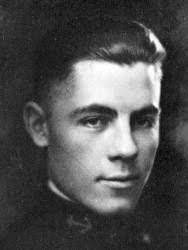
Willford Milton Hyman was born on 16 August 1901 in Pueblo, Colorado. 

He graduated from the United States Naval Academy in 1924. He first served on the battleship USS New Mexico and in the years before World War II, was assigned to many ships and a variety of shore stations, including the Office of Naval Operations. He assumed command of destroyer USS Sims on 6 October 1941. After convoy escort duty in the Atlantic, the USS Sims moved to the Pacific in early 1942.

In May, as the Japanese attempted to extend their conquest to Port Moresby, the ship was operating with oiler USS Neosho in a fueling group for Admiral Frank Jack Fletcher's aircraft carriers. While the carrier fleets maneuvered for position, Japanese planes found Neosho and Sims in the Coral Sea; and, thinking they were a carrier and escort, they attacked in strength. After Lieutenant Commander Hyman fought his ship through 2 air raids, 36 Japanese planes attacked the 2 ships. The USS Sims took three 500-lb. bomb hits in this third attack. From the time the first bomb that hit the USS Sims had exploded to the time she was sunk was a total of 48 seconds, leaving only 13 survivors. Realizing that the destroyer was damaged beyond repair, Hyman ordered "abandon ship" but remained on the bridge, directing the evacuation until going down with his ship. The sacrifice of his ship and Neosho had much to do with saving the Navy's carriers in the widely separated engagements known as the Battle of the Coral Sea. He was posthumously awarded the Navy Cross.

Construction began on the USS Hyman by Bath Iron Works, Bath, Maine on November 22, 1943, the ship was launched on April 8, 1944 and commissioned on June 16, 1944.

The USS Hyman conducted exhaustive shakedown training off Bermuda and in Casco Bay, Maine, before sailing from Boston on September 18, 1944 to join the Pacific war. Philip H. Prince's brother, Hugh Palmer Prince, was part of the ship's crew.  Philip had just missed seeing his brother prior to their departure. The USS Hyman steamed via the Panama Canal Zone and San Diego to Pearl Harbor on October 12, 1944. During the next few months she was occupied with training exercises, including practice amphibious assaults, and escort voyages to the advance base at Eniwetok.

When the island of Iwo Jima became a prime objective, the USS Hyman set sail on January 27, 1945, with the transports of Kelly Turner's expeditionary force, touching at Eniwetok before carrying out on Saipan a final rehearsal of the Iwo Jima landing. On the morning of 19 February, the destroyer formed part of the screen for the transports; and, as the first wave landed, she turned her 5-inch guns shoreward and opened fire to provide support for the assaulting troops. She bombarded Japanese troops and bunkers until February 23rd, when she made an antisubmarine sweep south of Iwo Jima. The next day, after returning to gunfire support station, the USS Hyman fought off an air attack. Fire support and other duties continued until the destroyer sailed for Leyte Gulf on March 2, 1945. There she took part in practice bombardments for the upcoming invasion of Okinawa.


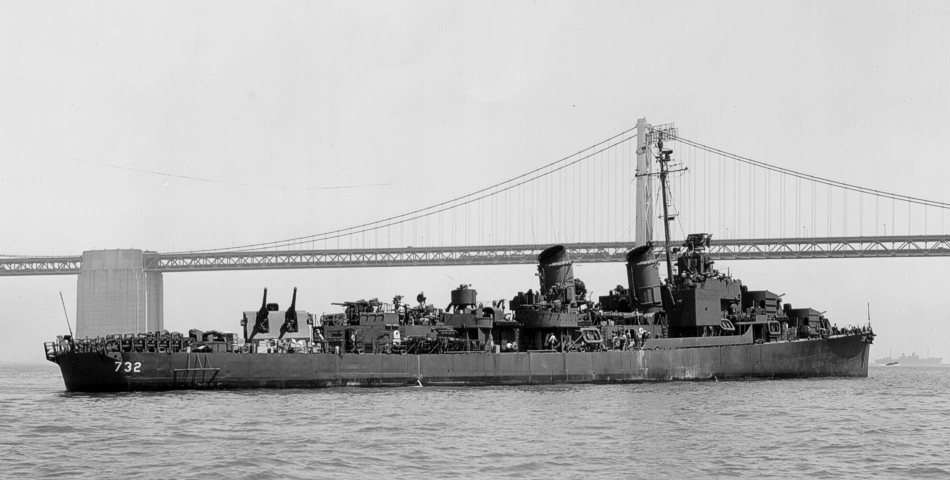
USS Hyman in San Francisco Bay, 20 July 1945.

Hyman sailed with Admiral Hall's Southern Attack Force 27 March 1945 and arrived in Okinawa 1 April.


Monday, September 19, 2022

An Appalachian Family

Walter Eugene Prince, Sr., was born in Anderson County, South Carolina, in 1886.  His family, which was of Scottish/Irish origin, had immigrated to Pennsylvania during the potato famine.  They subsequently migrated to the Appalachians, where they lived as farmers for generations.  Walter had a 7th grade education and probably worked on the family farm early in his life.  However, the railroad was his calling and he got a job as a brakeman with the Southern Railroad Company.  When a new line was built from Spartanburg to Kentucky, he saw an opportunity and applied for a position as a conductor with the new railroad.  He got the job and worked as a conductor until he retired at the age of 70.  He was a gruff, but loving father.  His job kept him away from home a lot. 

Mary Hunter Palmer was also from Anderson County.  One of her ancestors was Edward Hyde, who came over from Ireland and was the minister of a presbyterian church in Anderson County prior to the revolutionary war.  His statue still stands in front of the church today.  Mary graduated from the two year college in Asheville, North Carolina.  She wanted all of her children to go to college.  She worked as a telephone operator with Southern Bell. She was a very loving, caring, and wonderful lady.  She was stern when she had to be, which occasionally happened with six children.


Walter and Mary were married around 1916 and Hugh Palmer Prince was born two years later.  Philip Hunter Prince was born in Bostic, North Carolina on August 4,1926, and the family soon moved to Erwin, Tennessee.  He was the youngest son, and grew up in the midst of the Great Depression.  His family would recollect that before he was born they would travel to Florida and other places in the family car, a Buick Touring Car.  After he was born, the car was up on blocks.  There would be no trips during the Depression.  In fact, they would play in the car pretending to be John Dillinger.  Walter had a large garden in their backyard and leased 1-2 acres to farm in order to grow enough food to make it through the depression.  The whole family helped work the land.  


There was a CCC (Civilian Conservation Corps) encampment near Erwin, and they built a facility called Rock Creek Park.  One can’t help but be reminded of the public works programs instituted by FDR during the Depression and the real things that came out of it that still stand today.  


In 1939, Palmer decided to join the Navy.  He would be stationed in Norfolk. Philip looked up to his brother, seeing him make the decision to join the military at a time that there were already rumblings of war.  The year he graduated from high school, 1944, he actually took the train to Norfolk to visit his brother and saw the ocean for the first time.  He saw his first aircraft carrier and was impressed that man could build something so huge.  He didn’t get to see Palmer, who had just departed on the USS Hyman. He would never see him again.

Saturday, June 25, 2022

Stick to the Truth

I know that a lot of people, myself included, felt that yesterday was a very dark day. But I also know that there were a lot of people who felt the opposite. I like to call myself a "pragmatic idealist." Waking up this morning and reading about yesterday's decision, which the L.A. Times correctly noted to be 5-4 (Roberts did not actually vote to overturn Roe v. Wade), I'm struck most by the polarization in our country.  

If we are to move past this polarization, becoming more polarized doesn't seem to be the answer. I think it's important to maintain a coherent and rational approach to what is likely to happen in our individual states. I for one will not partake in rhetoric. California will not be criminalizing abortion. Texas will. My reading of the ruling makes it pretty clear that the Supreme Court is, in fact, going to leave abortion law to the states (with the clear exception of Thomas, and the possible exceptions of Comey Barrett and Alito). Kavanaugh has already come out and said that women can travel to another state to get an abortion. I don't see other rights being taken away (again with the exception of Thomas).  

What does this mean? It means two things. We must figure out how to keep Democrats in control of the Senate and the White House (we can't allow a further shift of the Supreme Court). We must help our friends in Red states stand up for their rights, and shine a brighter light on the true intentions of the Republican party as it is now constituted. True Libertarians should not find a home in the Republican party.

What concerns me, however, is the rhetoric. If we've learned one thing from donald trump and the trump republican party, is that lies are dangerous, rhetoric is dangerous. In this regard, I will always agree with Michelle Obama, we must take the high road. Let's stick to the facts and the truth. Let's tell the story of Lady Ruby over and over again to remind the public what we are dealing with. If 60% of Americans believe that women have a right to choose, let's make sure that ALL of them vote, in both blue and red states.

I do believe that we are at a crossroad. But I am also confident in the demographic trends of this country. We can not let the loudest people control the narrative. We do have to keep our eye on the prize. We must avoid taking extreme positions that stretch the truth in order to make a point, because doing so weakens the high ground that I believe we stand on. Stick to the facts. Stick to the truth. Keep engaging in thoughtful discussions with those who are willing to listen.

One final comment. There is one observation that gives me some solace. It is not uncommon for conservative Supreme Court justices to become more liberal over time (Blackmun, Souter, O'Conner, Kennedy to name a few), while it is less likely for a liberal justice to become conservative. I believe that there is a reason for this.

The grand experiment in the United States that began 250 years ago (with slavery and without women having the right to vote, I might add), is being tested right now. Let's take the high ground and do the work that's needed to get us back in the right direction. However, I do not believe that taking the playbook from the extreme right (or the far left as well at times), which includes lying and stretching the truth, is the answer. We have a lot of work to do, let's get started.

Monday, May 30, 2022

Showing Respect For Ironman

It's been three weeks, and while I'm itching to jump back fully into training, I know better. Ironman takes a huge toll on the body and one's physiology.  I remember in 2013, four weeks after completing Ironman Lake Tahoe (which ironically was very similar in the end to St. George), I ran one of my best 5K trail races ever!  And, three days later, I broke out with shingles.  On must show respect for Ironman, or it will kick you in the butt.

Since I'm not planning to do anymore full Ironman races, that doesn't mean that I won't train as if I'm going to do one. Or, not. The nice thing about completing an Ironman is that for the next 4-6 weeks it's absolutely ok to do whatever your body tells you to.  Today I ran 8 miles, which actually felt absolutely fine.  I'm not surprised that my muscles were ok, nor was I surprised that I was ok.  I wasn't fast, but that was the point, I just ran 8 miles.  It's pretty nice that, at the age of 63 (soon), I can go out and run 8 miles with no consequences.  The thing I have to be careful of is not to get ahead of myself.  It would be easy to put in some intensity, and I'd probably not only do fine, but possible do great. However, it would be playing with fire. I need to show respect for Ironman.

I only have two races scheduled this summer, and they're back to back on one weekend at the end of August.  A 4 hour race on Saturday followed by a one hour race on Sunday. In Santa Barbara. Should be fun, and that's the idea!  I could pretty well coast the rest of the summer and do them, but that's not me. I'll definitely put in some solid training, but I have no clue yet what that training will look like.  I'm planning to work on my swim and continue to stay strong with my run. Honestly, at this point, unless I was planning to do another Ironman, the bike almost takes care of itself.

As I reflect on Ironman St. George, I'm totally at peace with my decision to make it my last Ironman. I really have to question the long term impact of an Ironman race as I get older.  The last three weeks have reminded me of the impact on the body. More so, the impact on one's hormones and physiology. As a geriatrician, I've often said that older adults have less reserve. Completing an Ironman pretty much wipes out that reserve. I'll vouch for that. That's why I'll show respect for Ironman!

Friday, May 13, 2022

The Post-Ironman Nadir

When it hits, it really hits. Yesterday was the 5th day after the Ironman World Championship in St. George. The immediate post-race euphoria waned, and some typical life contemplation and reflection led to a serious emotional nadir. The irony is that I've recovered physically from this Ironman faster and better than any other that I've done. Hopefully, the emotional nadir, which I believe is hormonally induced, will pass quickly.

It's not to be lost that one of the things that my wife doesn't like about Ironman are the emotional ups and downs. The post-ironman nadir is the worst. I was hoping that it wouldn't hit me, but it did. Oftentimes, it's associated with physical feelings that make me wonder if I've developed an incurable and terminal illness (the vagaries of the post-ironman nadir and being a physician).

I woke up today feeling better, but it's probably too early to tell. I'll have to see how the day goes. My weight is also down to less than pre-ironman levels, which isn't necessarily bad, as I've been maintaining a healthy diet and avoiding the usual post-ironman non-stop buffet! I'm not sure what my true ideal weight is, although I certainly don't want to find myself skimping on necessary calories and nutrients as my body recovers from one of the most stressful things I can push on it. Nevertheless, empty calories never help, especially someone like me, where any extra sugar is immediately turned into fat, fueling other hormonal changes as well.

As a physician, I do love the physiological intrigue of the post-ironman nadir, and I'm sure that I can find previous blogs from my other fifteen Ironman's that correspond to this feeling and experience. That's for another day. Today, I'll just try to finally begin my real recovery from the most recent Ironman, and do my best to take note of the post-ironman nadir.

Sunday, May 8, 2022

Journey Back to the Ironman World Championship: Race Report for My Final Ironman

 Looking back to my childhood, for a variety of reasons, I never actively participated in team sports. First and foremost, I had asthma.  I think that my parents had concerns about my participation in sports. I probably also limited myself out of some fear of exacerbating my asthma. At the same time, I always loved sports.  I kept the statistics for my brother’s baseball teams.  I would throw the ball against the wall and play “games” by myself. I loved basketball.  I read the sports pages and knew all of the statistics.  My dad had a brief attempt at running during the “running craze” of the 70’s.  I tried to run but got easily winded and never really gave it a go.  I was in medical school in 1982 when I saw the Wide World of Sports episode where Julie Moss crawled across the finish line at the Hawaii Ironman.  It stayed in my head. When I began practicing as a geriatrician, I would tell my patients the value of exercise. I didn’t want to be one of those doctors who ‘do as they say, not as they do.’ I began swimming and biking and before long, running. By the time I did my first sprint triathlon in 1992, I already had the Hawaii Ironman in my head.  In fact, it became my goal to do an Ironman when I turned 40. When 1999 came, despite having done several marathons, work and life precluded me from training for an Ironman.  When 2009 came, and I turned fifty, I knew that it was time.  As part of my training, I qualified for the Long Course World Championships in Perth, Australia, where I crashed on my bike and suffered fractures of my hip socket, pelvis and clavicle.  Six months later I was in the water for a mass start at the very first Ironman St. George.  I’ll never forget the excitement of the day, starting with Mike Reilly on the loudspeaker in transition and then calling out,  “Michael Wasserman, You Are An Ironman,” at the end of a very long day (http://wassdoc.blogspot.com/2010/05/st-george-ironman-race-report.html). At the time, the 2010 Ironman St. George was one of the hardest Ironman’s ever. I came back in 2011 (http://wassdoc.blogspot.com/2011/05/ironman-st-george-race-report.html) and 2012, trying to continue to improve and challenge myself.  The 2012 race to this day is known as the most difficult Ironman race of all time (http://wassdoc.blogspot.com/2012/05/2012-ironman-st-george-race-report.html).


I finally raced in Kona at the Ironman World Championships in 2019 as a Legacy athlete (having completed at least 12 Ironman races). It was a culmination that I thought would allow me to “retire” from Ironman competition. Two things happened. First, I had a really bad sinus infection and wasn’t able to see how I “stacked up” with the best in my age group. Second, they brought back Ironman St. George. I had to sign up!  The pandemic not only postponed the race but changed my life completely. Over the last couple of years, I’ve become a stronger runner. So, when the 2022 Ironman St. George became the 2021 Ironman World Championship, it was “game on!” I'm ready!


My race report and how I decided that this would be my last full Ironman follows.


Coming back to where it all started had a bit of a surreal feeling to it.  Twelve years ago, almost to the day, I rode the bus to the Sand Hollow Reservoir and tried to “take in” everything about my first Ironman.  As I rode the bus today, it was very different. Being my 16th Ironman, the bus ride, when there is one, has become an opportunity to chill and to get “my head in the game,” or to meet other athletes and chat. I sat next to a guy my age from the East Coast. He and his wife and braved a spring storm driving to Utah in their electric car. 


While there are always training tweaks that could have been done, I’ve been pretty pleased with my preparation for this race.  My swim training had put me in as good of a place as I’ve been in for years, despite the fact that I really didn’t ramp up my swim volume until the last couple of months.  Just a week before leaving I swam 5K nonstop at a comfortable pace (under 2 minutes/100 yards). My run training had been exemplary, and I was excited to see how it translated on race day.  Ironically, while my run volume over the past six weeks had been less than I’d hoped to do, it still is more than my training volume before most of my previous Ironman races.  Also, I really haven’t been concerned about “getting in” run miles, but rather making sure I run close to 10 miles or more on most of my runs.  My recent half marathon results (one open, and the other as part of a half Ironman), had only served to boost my confidence.  


I had been concerned about a lack of bike volume, and a knee injury that began 7 weeks ago (and two weeks before the Oceanside 70.3) freaked me out until it didn’t.  The reason it didn’t was that my bike volume in the final weeks before today was not only solid, but actually felt good.  The injury seemed to be related to a strained adductor magnus, and I used KT tape to secure the muscle a couple of days prior to the race.  Despite the fact that had still been sore and tender when I arrived in St. George, it seemed to be improving.  My head was definitely in the right place as I arrived at Sand Hollow Reservoir.  


I immediately went to my bike and put my bottle with 1200 calories of nutrition on it. Then I found the port-a-potties with few lines. I laid down nearby to chill when I saw my coach, Tim, walk by (remarkable with over 3000 athletes). Tim sat down with me, and we chatted about what this race meant and what it didn’t mean. Twelve years after doing my first Ironman, and about to compete in my 16th, I’d often pondered why I did these (my wife certainly wonders the same thing). 


When I first started doing Ironman, I think there were a combination of factors driving me. I felt like I needed the incentive of a race to get myself to train. Having a strong history of heart disease in my family, I felt that exercise was important. I also love sports and the idea of competing in a sport as in individual definitely appealed to me.  I’ve never been particularly fast, so the endurance aspect of Ironman made sense. Moreover, it was a sport where you can continue to compete as you get older! I’m not sure how much I “enjoyed” training when I started to do these, but over the past few years I’ve realized how much I truly enjoy training.  I often say it’s really about the journey. In some ways, the race is “icing on the cake.” In other ways, it’s actually an unnecessary pressure.  My coach (who I’ve worked with for 17 years), and I, realized that we’re both in a very similar place.  It made for some interesting thoughts as my day went on.  Regardless, it was cool to race with Tim!  Before I knew it, it was time to line up for the swim start.  I poured some water down my wetsuit to help me acclimate to the cold water since we wouldn’t be allowed to get in the water in advance (this actually works).


I’d given a lot of thought to my swim strategy, starting with where to place myself.  With 10 people starting together and going off every 10 seconds, two things were clear to me.  First, in my age group, my swim pace would definitely be in the upper quartile, which meant that I could start close to the front.  Granted, there are swimmers who are still considerably faster than me, so, starting to the far left would keep me safe and allow me a few minutes to work my way towards the buoy line, if I so chose.  There would also be slower swimmers from the previous waves in front of me, which would mean navigating them as well, and so heading to the buoy line made the most sense.  Obviously, the next wave or two would have faster swimmers catching up, but I calculated that wouldn’t happen until after the first turn buoy and that they would pass me anyway.  Besides, there would always be the possibility of drafting off faster swimmers.


Before I knew it, I was in my planned spot on the far left, at the head of my age group.  Five, four, three, two, one…and I was off!  The water was cold, but I’m used to that, in fact, it felt both refreshing and exciting to get started!  Over the first few minutes, I gradually make my way closer to the buoy line.  I don’t want or need to have hand to hand combat, and really just want to enjoy the swim, maintain a constant pace and not burn any matches.  My swim preparation for this Ironman has been exemplary, and I know that I can keep a solid, yet comfortable effort and pace. After about five minutes, I’m focused on my form and just enjoying the experience.  Before I know it, I’m at the first turn buoy, which I swim closely to and head to my right.  Shortly after, I’m passed by someone from the wave behind me in a Pearly Gold cap, which I expected.  I focus on keeping along the buoy line, maintaining solid form, and keeping my elbows high….no getting punched in the head today!  I think about 2012 and the craziness of that swim, and how this is just so nice.  I get to the next two turn buoys and start heading back.  I really don’t want to use any excess energy on the swim, but I also don’t want to waste time.  My form is critical and I really focus on being streamlined in the water and having a good pull with each stroke. As I get close to the final turn buoy, I’m passed by a few people from the wave that started 10 minutes behind me, in Violet caps, I’m on track!  The nice thing about the age group wave starts is that I really don’t have many people passing me.  They really have to be amongst the fastest swimmers to catch me.  I am passing slower people from the waves in front of me, but by this time, I’ve passed most of them that I’m going to pass.  I make the final turn and now it’s about 800m to the swim finish.  A handful of guys in Green and Silver caps pass me during this last stretch.  I just pretend that I’m doing a long swim in the pool and that this time will go by quickly.  I do a little extra kicking to get the blood flowing to my legs.  As I get to the finish, I’m grateful that I didn’t have to navigate 5 foot swells.  I’m out of the water, pulling down the top of my wetsuit and take advantage of the wetsuit strippers.  I had planned to put on a mask for the transition tent but decide that I won’t be in there for too long, so I don’t. I’m actually able to comfortably jog to my bike bag, quickly sit down on a chair, put on my glasses, my headband, my aero cycling gloves and then my helmet.  I secure the helmet on my head, put my wetsuit and goggles back in the bag, hand the bag to a volunteer and jog to my bike, stopping briefly to get some sunscreen slathered on me.  I get my bike, which has my shoes attached to the pedals already, and make my way to the bike start.  I put my right foot in my shoe, push off with my left foot and put it on top of my left shoe, pedal a few strokes before reaching down to put my left foot in the shoe.  I secure both shoes and I’m off!


My  swim time was 1:16:46, my fastest Ironman swim in the last 7 years. 37th in my age group and 1,206thoverall.  My transition time was a very quick 6:38. 


The first couple of miles on the bike were just to get loose, before coming into a fast descent that went into the first climb of the day, starting with about a half of a mile at 6% grade, very similar to the hill that I jump on every day when I ride out of my neighborhood at home.  I was prepared for the opportunity to carry some speed into this climb and cut the climb by about a third, before completing the remaining mile which was more of a false flat.  The next several miles were flat, and I actually think I see my coach (after he passed me) at around Mile 10.  Turns out it was him!  However, I’m patient, knowing that trying to catch him would waste important energy.  I’ve begun thinking about how good I felt on the swim, and I start thinking about my discussion with Tim before the race. I begin thinking it might make sense for this to be my last Ironman. I felt so good on the swim, and I was feeling good on the bike. I was doing another Ironman World Championship.  There was something that began feeling right about St. George being both my first and last Ironman.  On the way back towards the start, we hit the same climb in reverse near mile 15, this time climbing for a little over a mile at ~6% grade.  


As I neared the top of the climb, I rode through some beautiful red rocks on both sides of the road. We were riding on the left side during this section. I was feeling good and had been planning to enjoy the golf course off to the side. I never got the chance. As I was looking up the road, a shocking situation played out. I saw a cyclist coming towards me on the other side of the road, and next to him was a motorcycle carrying a photographer. The motorcycle was drifting towards the cyclist. I thought I heard him yell out to the motorcyclist as he tried to move away towards our lane. The motorcycle not only didn’t move away, but kept moving in on the cyclist, finally hitting him, and falling on him pushing them both into our lane. I tapped my breaks and slowed down a bit and was able to avoid hitting them. I briefly thought about stopping, but I was already twenty or thirty yards past them.  I’d also seen them getting up as I passed, and I doubted that there was much that I could have done.  I told myself to remember to tell someone at the finish about what I saw (but 13 hours later I forgot).


We would be passing by Sand Hollow Reservoir nearing an hour on the bike and reaching our third 1 mile, 5% climb just after passing the Reservoir. All of the climbing that I’d been doing during training paid off as these climbs were pretty routine, and I avoided pushing a high gear, keeping my legs spinning in order to save them for the later serious climbs during the latter part of the bike.  The key to this portion of the course was patience. Too early to even consider “burning matches.”  Turning onto Highway 9 for a short stretch before turning around and coming back to head towards St. George, beginning with a long gradual descent, came at a great time to recover and focus on holding some speed, before hitting the 2 mile, 3% false flat of State Street.  It was really important here to not get too overzealous, and to stay within myself.  There was just enough climb to tax the legs if I tried to maintain a fast pace on this stretch.  Another short climb on Telegraph would come before a slightly longer climb on Washington Parkway and then the climb on the Buena Vista out and back.  All of these were similar to the early climbs and my routine climbing route in my neighborhood, once again reminding me to stay within myself, maintain a good cadence and stay out of higher gears.  It would be a long day on the bike and the real riding was yet to come!  I also followed my new Ironman nutrition plan, avoiding any calories for the first 45 minutes.  I learned this from listening to a Dave Scott YouTube video. I have suffered GI issues for many of my Ironman races, until using this approach in Kona. I hoped it would work again today.


Getting onto Red Hills Parkway was a reminder of the original Ironman St. George bike and run course, and the climb up was yet another 2 mile, 3% slog.  Despite all of the climbing on this course, these 3% grades just require patience, and maintaining that patience is easy with the beautiful surroundings.  Being in the moment is always the key to a successful Ironman.  I remember being thankful on the original course not having to climb from the other direction, with its 4-8% grades, that I would soon be descending, right around the 50 mile mark.  I had hoped to get to the halfway point on the bike right around 3 to 3 ¼ hours, which would come right after a short false flat climb past the entrance to Snow Canyon, which I’d be coming back to later for the final climb of the day.  Headwinds, probably between 10 and 20 mph, had slowed me down, and I hit the 52 mile mark in 3 ¼ hours.  Leaving the thought that I was going a little slower behind me, I took stock of the fact that I felt good, my legs weren’t tired and my hydration and nutritional efforts had left me prepared for the real bike race, which was about to start!  


The original Ironman course essentially “started” here, with two loops up to Veyo.  I was excited to only do the long gradual climb (1500 feet in 15 miles) once and then to have Snow Canyon as the final climb.  Once again, the key was to enjoy the scenery and not get too caught up in the pace.  The time will ultimately take care of itself, I think as I climb past Gunlock. A cow crosses the road in front of me. Fortunately, it continues and I don’t have to slow down too much. The time passes and before I know it, I’m turning right and going up “the Wall.”  Compared to the final ramps of the Portero wall at home, this actually feels quite doable.  I stand for a good part of the climb, but it’s over pretty quickly, leaving a short flat stretch that turns right at the Veyo Pie Shop.  It’s such a shame that I can’t stop for pie!   There’s one more climb before the long descent.  I realize, though, that at this point, the majority of the remaining 30 miles is downhill!  This is actually what I’ve been looking forward to.  I’ll be able to recover prior to the climb up Snow Canyon, and I can even take that climb pretty seriously.  At 4 miles with an average grade of 4.3%, not only doesn’t it scare me, but I’m actually looking forward to it!  Seems crazy after nearly 100 miles, but mentally it has always seemed like the appropriately crazy way to view it!  What I hadn’t taken into account was the 20 mph winds and the heat, which are slowing me down and sapping my energy.


I’m tired, but my legs are holding up. I’ve kept up my hydration and nutrition, and while I’d planned to attack the climb up Snow Canyon, I’m slogging as I go up the climb.  As planned, I take some moments to appreciate the beauty of one of my wife and I’s favorite places. As I near the top of the climb, there are actually more people walking their bikes than riding!  Coming off the right turn back to 18, it’s all downhill to T2, and I don’t stress too much to get every second out of the descent.  It’s much more important to get into T2 with a low heart rate and taking some opportunity to stretch out my legs and back a bit.


As I get close to the bike finish, I reach down and take my feet out of my shoes, keeping them on top of the shoes.  I decide not to execute a flying dismount, no reason to take any chances, and just come to a complete stop at the dismount line and get off my bike.  I hand my bike to a volunteer, and after 7 ½ hours in the saddle, am glad to be off the bike. I do take a moment to put on my mask, knowing that I’ll be in the tent for a few minutes. I grab my run bag, sit down, and take off my helmet.  I quickly slather some Vaseline on my feet, always a good idea, put on my running socks and slip on my HOKA Rocket X shoes.  I put my race belt on and then put my helmet and socks in the bag, put on my hat, stand up, hand my bag to a volunteer, and, after about a 2 minute stop to pee, am ready for the run.  I stop for some fluids and some more sunscreen.  I put some Vaseline under my armpits (where I typically chafe), and I’m off to the run start.  My transition time was 9:06. Solid.


My bike time was 7:36:14, 65th in my age group, 1,881st overall.  Nearly 15 miles an hour for 112 miles with 7500 feet of climbing in 90 degree temperatures and 20 mph winds. Lots to be proud of.  I will acknowledge that while, trying to ignore how much the bike has sapped my energy, I had been fighting that fact since the climb up Snow Canyon, feeling pain in the bottom of both feet and recognizing it had already been a long day.


My coach always says that the key to an Ironman is to swim easy, bike easy, and run easy, until it gets hard.  That’s my goal.  I’ve run this course nearly a year ago and am familiar with it.  The first three miles are ~1-2% incline, which isn’t bad, but I take great pains not to push too hard.  In fact, I start out by walking.  There’s a steeper climb right near the start and after I turn left I try to run and realize it’s going to be a harder day than I planned.  The primary reason is that my low back is tight, making running more challenging.  I’m also “spent.”  I start chatting with a younger athlete who tells me that he normally is competitive for a podium spot in his age group, but that he’s completely spent. I feel much better. I see my coach, nearing the finish of his first lap of the run and he tells me how hard the bike was. I’m actually encouraged to know that I’m not alone.  I tell him that I’ll see him when he “catches me” later in the loop.  I get through the first three miles maintaining a pace of around 14 minutes/mile, and now have about a three mile section with a 1-2% decline.  I run, while being careful not to get too ahead of myself, while keeping close to a 10 minute/mile pace.  There’s still a long way to go. Keep it easy, until it gets hard, but it’s already hard.    I get to the turnaround, and I’ve been consistent.  I know that I have about 3 miles of slight uphill followed by ~3 miles of downhill before getting back to the turnaround for the second lap.  I alternate walking a running, mostly walking uphill to keep close to 14 minute/mile pace and then my downhill running (and walking now) pace is closer to 11 minutes to mile. I get to the half marathon point and am excited to know that I only have one more lap. I know I’ll finish and I share with fellow athletes how it’s an opportunity to “have a good time,” rather than worrying about achieving a “good time.”  My pace continues to alternate between 14 minutes per mile on the uphills and 11 minutes per mile on the downhill sections.  But I’m really feeling tired and my back continues to be tight.  At mile 19 I start walking with another athlete who turns out to be a cardiologist from San Diego.   He’s 40 years old and has done 20 Ironman’s for the “Fuck Cancer” philanthropy. We actually have a mutual friend. He’s also normally faster. I decide that this is a great opportunity to rest and relax and not worry about my time.  We see athletes on the side of road puking. It’s truly carnage. This course has humbled a lot of people.  My pace slows to about 17 minutes/mile for the next few miles as I decide to just enjoy the company of a fellow athlete.  I actually manage to run mile 23-25 at around a 12 minute pace.   Still, it’s hard. It’s windy. I’m tired. My back still hurts. So I walk until I get to the finishing chute, where, as always, I have wings and energy to the finish line waving my arms in the air to get the crowd to cheer.  I stop at the finish line and raise my right hand showing four fingers to represent the four St. George Ironman’s that I’ve completed.  There were only 26 people who completed the first three, and I’m sure there’s a lot fewer who have now completed all four.


My run was 5:54:53, 48th in my age group, 1676th overall. 2,294 people finish the race, with nearly 3,000 starting.   Another St. George Ironman with a high DNF (Do Not Finish) rate.  My finishing time is 15:03:35, my slowest Ironman finish time on arguably the hardest course in the world.  That puts me 53rd out of 90 men in my age group who finished (there were nearly 150 signed up, and probably closer to 110 who started).  I’m 1,714th overall out of 2,294, keeping in mind that hundreds of people didn’t even finish (they’re not counted in the results).  I’ve definitely acquitted myself well in the Ironman World Championship!


My mind was made up early in the race, and it hasn’t changed at the end.  Good result. Bad result. In between. I love the training. The race, the medals, aren’t why I do Ironman. The idea of swimming, biking and running based on how I feel on any given day, appeals to me. Ironman races also take a lot out of you. My wife reminds me that I get depressed after my races. She’s right. My coach made a great comment to me this morning, which was that the pressure of “having” to train because you have a race ahead, is an unnecessary distraction from the enjoyment of training.  I get it! That same pressure also impedes one’s time for other things, including family, which is my number one priority. Furthermore, training builds you up. The training is every day. It’s the life I enjoy and want to continue to enjoy. It’s really what defines me now.  Not only don’t I have anything to prove, I want to truly live my life in the moment.  I also no longer have a need to “prove” my ability in an Ironman World Championship.  At the age of 63, I just finished the hardest Ironman in the world for the fourth time! There isn’t a better time to step away from racing full Ironman’s. I look forward to training “in the moment” for the rest of my life. Afterall, I often say that Ironman is a metaphor for life.  Maybe now I’ll say that life is a metaphor for Ironman.