Sunday, September 25, 2022

8 Miles

I haven't run more than 4 miles since early June. My last Ironman in May literally ripped me to shreds and following it up with a half marathon in early June wasn't the best idea.  I love to run. I've wanted to run. I go to bed at night thinking I'll run in the morning, and then I don't.  I don't think I'd run at all in the past couple of weeks.  Today was the day.

My back wasn't aching when I got up. Sure, my body has a few aches and pains, but what do I expect at 63.  Emotionally, I felt good this morning, which has not been the case on many days for some time.  I read the newspaper and took my time getting ready to go out and run. And then I did.  I ran 8 miles.

8 miles has been somewhat of a staple for me over the past couple of years.  It actually started as 7 miles, and ultimately grew to 10 miles, but I've looked forward to coming back to those 8 miles.  I immediately recognized that my mind went right to meditation. I guess I always knew this, even as I've tried to meditate while sitting down. Running is my good place. Running is where I can use all of the meditation tools. Thoughts come and go, and I let them. Sometimes I just connect with my surroundings.  Sometimes I think of other things. Good and bad, but I note them and move on. running is my good place. 8 miles.

In the spirit of meditation, I don't know how far I'll run tomorrow.  There's a part of me that already is intent on running every day. There's a part of me that's already intent on running 8 miles anytime I feel up to it. The journey begins anew. 8 miles.

Saturday, September 24, 2022

April 6, 1945: The Battle of Okinawa

The USS Hyman sailed with Admiral Hall's Southern Attack Force on March 27, 1945 and arrived in Okinawa on April 1, 1945.

Her main role was to protect American ships from enemy submarines and planes. She fought off several air attacks and on April 5, led a search group hunting a reported midget submarine. The next day the ship was attacked as the Japanese made kamikaze attacks in hopes of stopping the landing. 

On April 6, 1945, the date of the largest mass kamikaze attack of World War II, seven Japanese kamikaze aircraft attacked the USS Hyman (DD-732), (In the Wake of the Jellybean, Ray Novotny, https://www.kamikazeimages.net/books/ships/hyman/index.htm). “The ship's gunners, sometimes with assistance from other ships, shot down all of the attacking planes except one. The fourth plane, a Zero fighter, managed to crash into the ship between the stacks even though heavily damaged by gunfire. Former Hyman crewman Oscar Murray described the Zero that hit the ship:

“My General Quarters station was as a gunner on a 20-mm anti-aircraft gun. I wonder if things would have been different had I been able to fire another two seconds at the Japanese plane that struck and nearly sank us. He was so close.

The head of the pilot turned toward us as he struck the stacks. Just before striking the ship, I, or others, shot off his left wing but the plane's momentum carried him into the ship. The plane's explosion, along with its gasoline, blew away the area between the two stacks almost to the waterline, and with most of the forward torpedo mount. Flaming gasoline flowed in all the surrounding areas, burning or killing many below and several above deck.

As I followed the plane, my gun came to a complete stop, abruptly halted by the gun stops designed to prevent guns from rotating too far and doing damage to the ship's superstructure. By then he was out of sight and immediately struck the ship. Normally, Japanese planes exploded upon a direct hit but this one didn't. Had I or others been able to hit him with more rounds, perhaps he would have done so, I will never know: I know we did our best.”

The crash by the kamikaze plane and the subsequent explosion killed 12 and wounded 41 men aboard the USS Hyman. One of the men who died was Philip’s older brother Hugh Palmer Prince. 


Tuesday, September 20, 2022

The History of the USS Hyman

Willford Milton Hyman was born on 16 August 1901 in Pueblo, Colorado. 

He graduated from the United States Naval Academy in 1924. He first served on the battleship USS New Mexico and in the years before World War II, was assigned to many ships and a variety of shore stations, including the Office of Naval Operations. He assumed command of destroyer USS Sims on 6 October 1941. After convoy escort duty in the Atlantic, the USS Sims moved to the Pacific in early 1942.

In May, as the Japanese attempted to extend their conquest to Port Moresby, the ship was operating with oiler USS Neosho in a fueling group for Admiral Frank Jack Fletcher's aircraft carriers. While the carrier fleets maneuvered for position, Japanese planes found Neosho and Sims in the Coral Sea; and, thinking they were a carrier and escort, they attacked in strength. After Lieutenant Commander Hyman fought his ship through 2 air raids, 36 Japanese planes attacked the 2 ships. The USS Sims took three 500-lb. bomb hits in this third attack. From the time the first bomb that hit the USS Sims had exploded to the time she was sunk was a total of 48 seconds, leaving only 13 survivors. Realizing that the destroyer was damaged beyond repair, Hyman ordered "abandon ship" but remained on the bridge, directing the evacuation until going down with his ship. The sacrifice of his ship and Neosho had much to do with saving the Navy's carriers in the widely separated engagements known as the Battle of the Coral Sea. He was posthumously awarded the Navy Cross.

Construction began on the USS Hyman by Bath Iron Works, Bath, Maine on November 22, 1943, the ship was launched on April 8, 1944 and commissioned on June 16, 1944.

The USS Hyman conducted exhaustive shakedown training off Bermuda and in Casco Bay, Maine, before sailing from Boston on September 18, 1944 to join the Pacific war. Philip H. Prince's brother, Hugh Palmer Prince, was part of the ship's crew.  Philip had just missed seeing his brother prior to their departure. The USS Hyman steamed via the Panama Canal Zone and San Diego to Pearl Harbor on October 12, 1944. During the next few months she was occupied with training exercises, including practice amphibious assaults, and escort voyages to the advance base at Eniwetok.

When the island of Iwo Jima became a prime objective, the USS Hyman set sail on January 27, 1945, with the transports of Kelly Turner's expeditionary force, touching at Eniwetok before carrying out on Saipan a final rehearsal of the Iwo Jima landing. On the morning of 19 February, the destroyer formed part of the screen for the transports; and, as the first wave landed, she turned her 5-inch guns shoreward and opened fire to provide support for the assaulting troops. She bombarded Japanese troops and bunkers until February 23rd, when she made an antisubmarine sweep south of Iwo Jima. The next day, after returning to gunfire support station, the USS Hyman fought off an air attack. Fire support and other duties continued until the destroyer sailed for Leyte Gulf on March 2, 1945. There she took part in practice bombardments for the upcoming invasion of Okinawa.


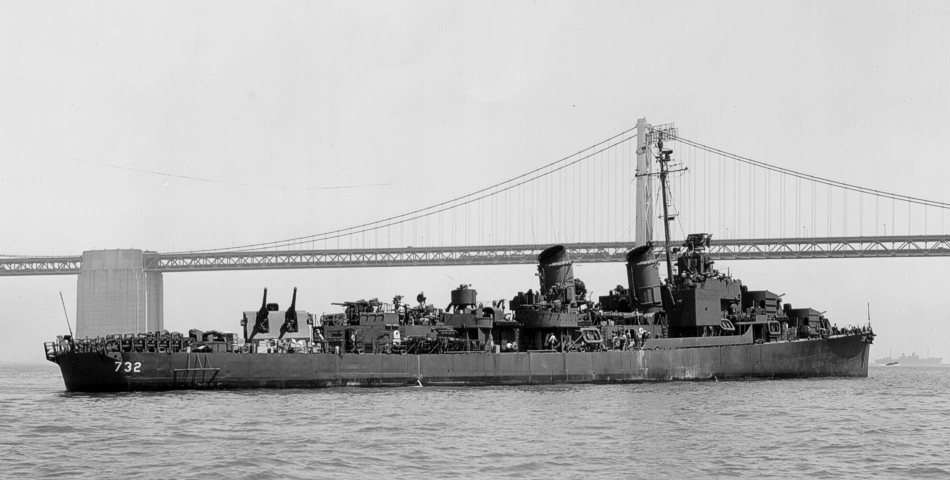
USS Hyman in San Francisco Bay, 20 July 1945.

Hyman sailed with Admiral Hall's Southern Attack Force 27 March 1945 and arrived in Okinawa 1 April.


Monday, September 19, 2022

An Appalachian Family

Walter Eugene Prince, Sr., was born in Anderson County, South Carolina, in 1886.  His family, which was of Scottish/Irish origin, had immigrated to Pennsylvania during the potato famine.  They subsequently migrated to the Appalachians, where they lived as farmers for generations.  Walter had a 7th grade education and probably worked on the family farm early in his life.  However, the railroad was his calling and he got a job as a brakeman with the Southern Railroad Company.  When a new line was built from Spartanburg to Kentucky, he saw an opportunity and applied for a position as a conductor with the new railroad.  He got the job and worked as a conductor until he retired at the age of 70.  He was a gruff, but loving father.  His job kept him away from home a lot. 

Mary Hunter Palmer was also from Anderson County.  One of her ancestors was Edward Hyde, who came over from Ireland and was the minister of a presbyterian church in Anderson County prior to the revolutionary war.  His statue still stands in front of the church today.  Mary graduated from the two year college in Asheville, North Carolina.  She wanted all of her children to go to college.  She worked as a telephone operator with Southern Bell. She was a very loving, caring, and wonderful lady.  She was stern when she had to be, which occasionally happened with six children.


Walter and Mary were married around 1916 and Hugh Palmer Prince was born two years later.  Philip Hunter Prince was born in Bostic, North Carolina on August 4,1926, and the family soon moved to Erwin, Tennessee.  He was the youngest son, and grew up in the midst of the Great Depression.  His family would recollect that before he was born they would travel to Florida and other places in the family car, a Buick Touring Car.  After he was born, the car was up on blocks.  There would be no trips during the Depression.  In fact, they would play in the car pretending to be John Dillinger.  Walter had a large garden in their backyard and leased 1-2 acres to farm in order to grow enough food to make it through the depression.  The whole family helped work the land.  


There was a CCC (Civilian Conservation Corps) encampment near Erwin, and they built a facility called Rock Creek Park.  One can’t help but be reminded of the public works programs instituted by FDR during the Depression and the real things that came out of it that still stand today.  


In 1939, Palmer decided to join the Navy.  He would be stationed in Norfolk. Philip looked up to his brother, seeing him make the decision to join the military at a time that there were already rumblings of war.  The year he graduated from high school, 1944, he actually took the train to Norfolk to visit his brother and saw the ocean for the first time.  He saw his first aircraft carrier and was impressed that man could build something so huge.  He didn’t get to see Palmer, who had just departed on the USS Hyman. He would never see him again.

Saturday, June 25, 2022

Stick to the Truth

I know that a lot of people, myself included, felt that yesterday was a very dark day. But I also know that there were a lot of people who felt the opposite. I like to call myself a "pragmatic idealist." Waking up this morning and reading about yesterday's decision, which the L.A. Times correctly noted to be 5-4 (Roberts did not actually vote to overturn Roe v. Wade), I'm struck most by the polarization in our country.  

If we are to move past this polarization, becoming more polarized doesn't seem to be the answer. I think it's important to maintain a coherent and rational approach to what is likely to happen in our individual states. I for one will not partake in rhetoric. California will not be criminalizing abortion. Texas will. My reading of the ruling makes it pretty clear that the Supreme Court is, in fact, going to leave abortion law to the states (with the clear exception of Thomas, and the possible exceptions of Comey Barrett and Alito). Kavanaugh has already come out and said that women can travel to another state to get an abortion. I don't see other rights being taken away (again with the exception of Thomas).  

What does this mean? It means two things. We must figure out how to keep Democrats in control of the Senate and the White House (we can't allow a further shift of the Supreme Court). We must help our friends in Red states stand up for their rights, and shine a brighter light on the true intentions of the Republican party as it is now constituted. True Libertarians should not find a home in the Republican party.

What concerns me, however, is the rhetoric. If we've learned one thing from donald trump and the trump republican party, is that lies are dangerous, rhetoric is dangerous. In this regard, I will always agree with Michelle Obama, we must take the high road. Let's stick to the facts and the truth. Let's tell the story of Lady Ruby over and over again to remind the public what we are dealing with. If 60% of Americans believe that women have a right to choose, let's make sure that ALL of them vote, in both blue and red states.

I do believe that we are at a crossroad. But I am also confident in the demographic trends of this country. We can not let the loudest people control the narrative. We do have to keep our eye on the prize. We must avoid taking extreme positions that stretch the truth in order to make a point, because doing so weakens the high ground that I believe we stand on. Stick to the facts. Stick to the truth. Keep engaging in thoughtful discussions with those who are willing to listen.

One final comment. There is one observation that gives me some solace. It is not uncommon for conservative Supreme Court justices to become more liberal over time (Blackmun, Souter, O'Conner, Kennedy to name a few), while it is less likely for a liberal justice to become conservative. I believe that there is a reason for this.

The grand experiment in the United States that began 250 years ago (with slavery and without women having the right to vote, I might add), is being tested right now. Let's take the high ground and do the work that's needed to get us back in the right direction. However, I do not believe that taking the playbook from the extreme right (or the far left as well at times), which includes lying and stretching the truth, is the answer. We have a lot of work to do, let's get started.

Monday, May 30, 2022

Showing Respect For Ironman

It's been three weeks, and while I'm itching to jump back fully into training, I know better. Ironman takes a huge toll on the body and one's physiology.  I remember in 2013, four weeks after completing Ironman Lake Tahoe (which ironically was very similar in the end to St. George), I ran one of my best 5K trail races ever!  And, three days later, I broke out with shingles.  On must show respect for Ironman, or it will kick you in the butt.

Since I'm not planning to do anymore full Ironman races, that doesn't mean that I won't train as if I'm going to do one. Or, not. The nice thing about completing an Ironman is that for the next 4-6 weeks it's absolutely ok to do whatever your body tells you to.  Today I ran 8 miles, which actually felt absolutely fine.  I'm not surprised that my muscles were ok, nor was I surprised that I was ok.  I wasn't fast, but that was the point, I just ran 8 miles.  It's pretty nice that, at the age of 63 (soon), I can go out and run 8 miles with no consequences.  The thing I have to be careful of is not to get ahead of myself.  It would be easy to put in some intensity, and I'd probably not only do fine, but possible do great. However, it would be playing with fire. I need to show respect for Ironman.

I only have two races scheduled this summer, and they're back to back on one weekend at the end of August.  A 4 hour race on Saturday followed by a one hour race on Sunday. In Santa Barbara. Should be fun, and that's the idea!  I could pretty well coast the rest of the summer and do them, but that's not me. I'll definitely put in some solid training, but I have no clue yet what that training will look like.  I'm planning to work on my swim and continue to stay strong with my run. Honestly, at this point, unless I was planning to do another Ironman, the bike almost takes care of itself.

As I reflect on Ironman St. George, I'm totally at peace with my decision to make it my last Ironman. I really have to question the long term impact of an Ironman race as I get older.  The last three weeks have reminded me of the impact on the body. More so, the impact on one's hormones and physiology. As a geriatrician, I've often said that older adults have less reserve. Completing an Ironman pretty much wipes out that reserve. I'll vouch for that. That's why I'll show respect for Ironman!

Friday, May 13, 2022

The Post-Ironman Nadir

When it hits, it really hits. Yesterday was the 5th day after the Ironman World Championship in St. George. The immediate post-race euphoria waned, and some typical life contemplation and reflection led to a serious emotional nadir. The irony is that I've recovered physically from this Ironman faster and better than any other that I've done. Hopefully, the emotional nadir, which I believe is hormonally induced, will pass quickly.

It's not to be lost that one of the things that my wife doesn't like about Ironman are the emotional ups and downs. The post-ironman nadir is the worst. I was hoping that it wouldn't hit me, but it did. Oftentimes, it's associated with physical feelings that make me wonder if I've developed an incurable and terminal illness (the vagaries of the post-ironman nadir and being a physician).

I woke up today feeling better, but it's probably too early to tell. I'll have to see how the day goes. My weight is also down to less than pre-ironman levels, which isn't necessarily bad, as I've been maintaining a healthy diet and avoiding the usual post-ironman non-stop buffet! I'm not sure what my true ideal weight is, although I certainly don't want to find myself skimping on necessary calories and nutrients as my body recovers from one of the most stressful things I can push on it. Nevertheless, empty calories never help, especially someone like me, where any extra sugar is immediately turned into fat, fueling other hormonal changes as well.

As a physician, I do love the physiological intrigue of the post-ironman nadir, and I'm sure that I can find previous blogs from my other fifteen Ironman's that correspond to this feeling and experience. That's for another day. Today, I'll just try to finally begin my real recovery from the most recent Ironman, and do my best to take note of the post-ironman nadir.